


Wet and Dry Vacuum Cleaners for Commercial Use
A professional Wet and Dry Vacuum Cleaner gives facility teams the flexibility to handle dry dust, loose debris and liquid spills with one cleaning machine. At Delta Solutions, we offer Kärcher wet and dry vacuum cleaners for professional, commercial and industrial cleaning requirements across Delhi NCR.
The range includes compact and mobile machines for routine cleaning, larger-capacity models for demanding applications, semi-automatic filter-cleaning systems for maintaining suction performance, dual-motor machines for higher-volume cleaning, and specialised safety vacuum solutions for specific dust environments.
Whether you manage a factory, warehouse, workshop, hotel, hospital, institutional facility or commercial property, choosing the right wet and dry vacuum is about more than tank capacity or motor wattage. The type and volume of material being collected, operating frequency, filtration requirements, mobility and working environment should all influence your decision.
Explore the available models below or Enquire Now for help identifying the right machine for your facility.
How to choose a commercial wet and dry vacuum cleaner
Match the machine to your site, not only the sticker price. For offices, hotels and light commercial areas, compact models such as the NT 22/1 or NT 30/1 keep mobility high. Workshops and factories with more debris usually need larger tanks like the NT 40/1, NT 65/2 or NT 70/2.
- Debris type: fine dust needs better filtration; liquids need a true wet/dry design with safe shut-off.
- Shift length: longer cleaning cycles favour larger containers so operators empty less often.
- Mobility: narrow aisles and multi-floor sites need lighter machines and manageable cable length.
- Filter cleaning: Ap / Tact systems help maintain suction when dust load is high.
Delta Solutions is an authorized Kärcher dealer for Delhi NCR. We help you compare models, arrange demos and supply genuine accessories. Call +91-9315951397 or request a quote.
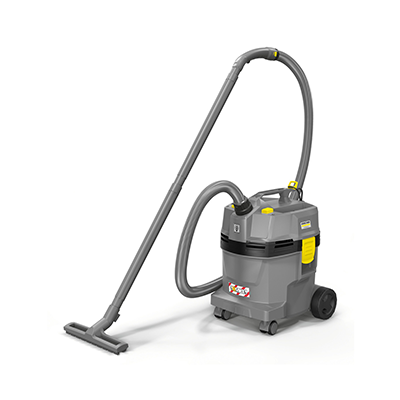
Karcher Wet and Dry Vacuum - Basic (NT 22/1 Ap L)
(NT 22/1 Ap L)
Technical data:
- Air flow rate (l/s) : 71
- Vacuum (mbar/ kPa) : 255 / 25.5
- Container capacity (I) 22
- Max. rated input power (W) : 1300
- Standard nominal width : 35
- Cable length (m) 6
- Sound pressure level dB(A) : 72
- Container material plastic
- Number of motors 1
- Frequency (Hz) 50–60
- Voltage (V) 220–240
- Weight (kg) 5.7
- Dimensions (L × W × H) (mm) 380 × 370 × 480
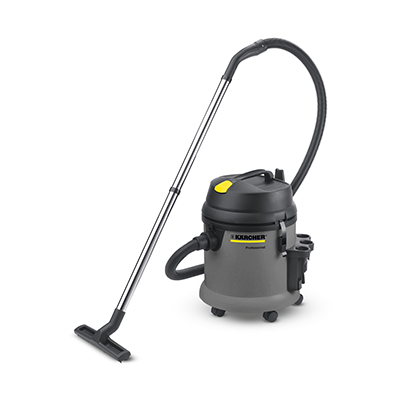
Karcher Wet and Dry Vacuum - Standard Class (NT 27/1)
(NT 27/1)
Technical data:
- Air flow (l/s) : 67
- Vacuum (mbar/ kPa) : 200 / 20
- Container capacity (I) 27
- Max. rated input power (W) : 1380
- Standard nominal width : 35
- Cable length (m) 7.5
- Sound pressure level dB(A) : 72
- Container material plastic
- Number of motors 1
- Frequency (Hz) 50–60
- Voltage (V) 220–240
- Weight (kg) 7.5
- Dimensions (L × W × H) (mm) 420 × 420 × 525

Karcher Wet and Dry Vacuum - Classic metal body (NT 30/1 Me Classic)
(NT 30/1 Me Classic)
Technical data:
- Air flow rate (l/s) : 2 x 53
- Vacuum (mbar/ kPa) : 225 / 22.5
- Container capacity (I) 70
- Max. rated input power (W) : 2300
- Standard nominal width : 40
- Cable length (m) 7.5
- Sound pressure level dB(A) : 76
- Container material Stainless steel
- Number of motors 2
- Frequency (Hz) 50–60
- Voltage (V) 220–240
- Weight (kg) 18
- Dimensions (L × W × H) (mm) 560 × 502 × 832
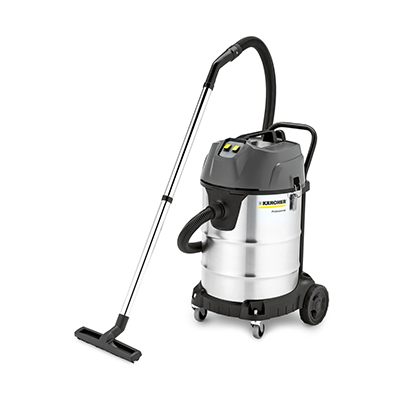
Karcher Wet and Dry Vacuum - Classic metal body (NT 70/2 Me Classic)
(NT 70/2 Me Classic)
Technical data:
- Air flow rate (l/s) : 59
- Vacuum (mbar/ kPa) : 227/22.7
- Container capacity (I) 30
- Max. rated input power (W) : 1500
- Standard nominal width : 35
- Cable length (m) 6.5
- Sound pressure level dB(A) : 78
- Container material Stainless steel
- Number of motors 1
- Frequency (Hz) 50–60
- Voltage (V) 220–240
- Weight (kg) 8
- Dimensions (L × W × H) (mm) 375 × 360 × 645
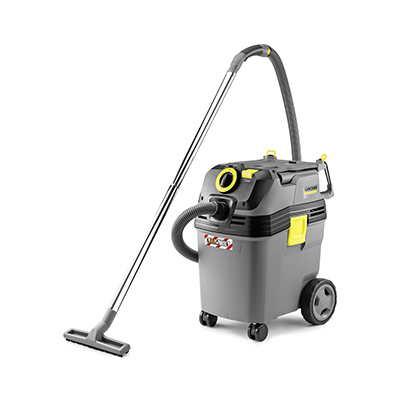
Karcher Wet and Dry Vacuum - Ap Class (NT 40/1 Ap L)
(NT 40/1 Ap L)
Technical data:
- Air flow rate (l/s) : 2 x 53
- Vacuum (mbar/ kPa) : 225 / 22.5
- Container capacity (I) 70
- Max. rated input power (W) : 2300
- Standard nominal width : 40
- Cable length (m) 7.5
- Sound pressure level dB(A) : 76
- Container material Stainless steel
- Number of motors 2
- Frequency (Hz) 50–60
- Voltage (V) 220–240
- Weight (kg) 18
- Dimensions (L × W × H) (mm) 560 × 502 × 832
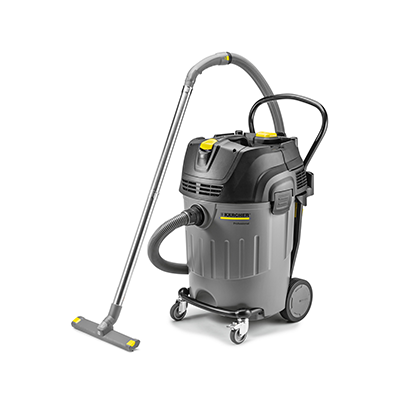
Karcher Wet and Dry Vacuum - Ap Class (NT 65/2 Ap)
(NT 65/2 Ap)
Technical data:
- Air flow rate (l/s) : 2 x 74
- Vacuum (mbar/ kPa) : 254 / 25.4
- Container capacity (I) 65
- Max. rated input power (W) : max. 2760
- Standard nominal width : ID 40
- Cable length (m) 10
- Sound pressure level dB(A) : 73
- Container material plastic
- Number of motors 2
- Frequency (Hz) 50–60
- Voltage (V) 220–240
- Weight (kg) 20
- Dimensions (L × W × H) (mm) 600 × 480 × 920
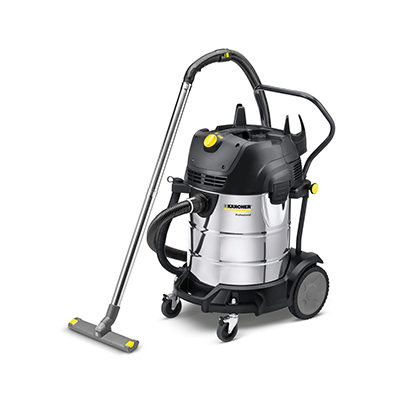
Karcher Wet and Dry Vacuum - Tact Class (NT 75/2 Tact2 Me)
(NT 75/2 Tact2 Me)
Technical data:
- Air flow rate (l/s) : 2 x 74
- Vacuum (mbar/ kPa) : 254 / 25.4
- Container capacity (I) 75
- Max. rated input power (W) : max. 2760
- Standard nominal width : 40
- Cable length (m) 10
- Sound pressure level dB(A) : 73
- Container material Stainless steel
- Number of motors 2
- Frequency (Hz) 50–60
- Voltage (V) 220–240
- Weight (kg) 27.5
- Dimensions (L × W × H) (mm) 630 × 545 × 920
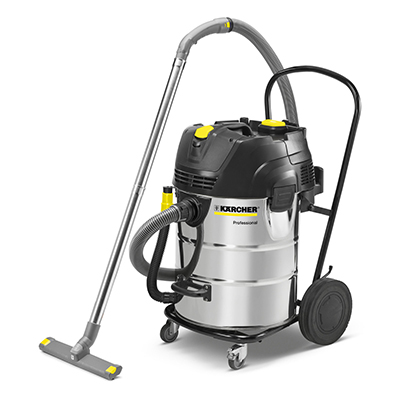
Karcher Wet and Dry Vacuum - Ap Class (NT 75/2 Ap Me Tc)
(NT 75/2 Ap Me Tc)
Technical data:
- Air flow rate (l/s) : 2 x 74
- Current type Ph / V / Hz : 1 / 220 – 240 / 50 – 60
- Vacuum (mbar/ kPa) : 254 / 25.4
- Container capacity (I) : 75
- Max. rated input power (W) : max. 2760
- Standard nominal width : ID 40
- Cable length (m) : 10
- Sound pressure level dB(A) : 73
- Container material : Stainless steel
- Number of motors : 2
- Weight (kg) : 26
- Dimensions (L × W × H) (mm) : 700 × 505 × 995
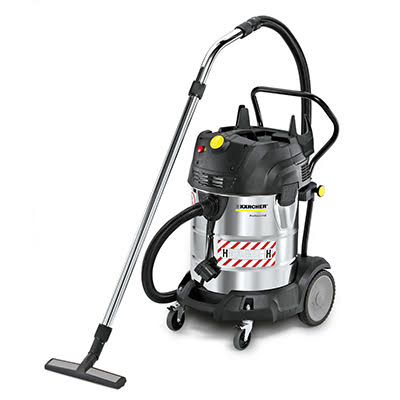
Karcher Wet and Dry Vacuum - Safety System (NT 75/1 Me Ec H Z22)
(NT 75/1 Me Ec H Z22)
Technical data:
- Air flow rate (l/s) : 61
- Current type V / Hz : 220 – 240 / 50 – 60
- Vacuum (mbar/ kPa) : 220 / 22
- Container capacity (I) : 75
- Max. rated input power (W) : 1000
- Standard nominal width : DN 40
- Cable length (m) : 10
- Sound pressure level dB(A) : 76
- Weight (kg) : 27.8
- Dimensions (L × W × H) (mm) : 640 × 540 × 925
Find the Right Wet and Dry Vacuum Cleaner for Your Facility
Not every wet and dry vacuum is designed for the same workload.
A compact machine that works efficiently for mobile cleaning and everyday maintenance may not be the right choice for a facility regularly dealing with large quantities of dirt. Similarly, a high-capacity dual-motor vacuum may offer more capability than necessary for smaller cleaning areas.
The right selection starts with the actual application.
Consider what the machine will collect most often. Is it primarily dry dust and debris, frequent liquid spills, or a combination of both? Think about how long the machine will typically operate, how often the container will need to be emptied, whether fine dust is present, and how easily operators need to move the machine between cleaning areas.
The Kärcher range available through Delta Solutions covers different levels of professional cleaning requirements—from the lightweight NT 22/1 Ap L to higher-capacity machines such as the NT 65/2 Ap and NT 75/2 series, as well as the specialised NT 75/1 Me Ec H Z22 for defined safety-critical applications.
This breadth of choice allows facility managers and purchase teams to select according to the application rather than simply buying the machine with the largest tank or highest rated input power.
Wet and Dry Vacuum Cleaner Models Available at Delta Solutions
Understanding the practical differences between models can make procurement considerably easier. Here's how the available range can be approached from a buyer's perspective.
Kärcher NT 22/1 Ap L – Compact and Mobile Wet & Dry Cleaning
The Kärcher NT 22/1 Ap L is designed for buyers who prioritise mobility without sacrificing professional cleaning performance.
With a 22-litre container, airflow of 71 l/s, vacuum of 255 mbar (25.5 kPa) and a machine weight of just 5.7 kg, it is particularly suitable where operators frequently move the vacuum between different cleaning locations.
One of its key advantages is its semi-automatic filter cleaning system, which helps maintain suction performance. Its moisture-resistant filter also enables operators to move between wet and dry vacuuming without first having to dry the filter.
This makes the NT 22/1 Ap L a practical option for mobile maintenance, workshops and professional cleaning applications where a compact machine is preferable.
Best suited for: Buyers looking for a lightweight, compact and versatile professional wet and dry vacuum.
Kärcher NT 27/1 – Practical Choice for Everyday Commercial Cleaning
The Kärcher NT 27/1 combines a 27-litre container with a compact, user-friendly design intended for commercial wet and dry cleaning.
It delivers airflow of 67 l/s and vacuum pressure of 200 mbar (20 kPa). A practical feature for busy commercial environments is the all-round bumper, which helps protect the machine against knocks during everyday use.
At 7.5 kg, the NT 27/1 remains manageable for operators who need to move between cleaning areas while offering greater container capacity than the NT 22/1 Ap L.
Best suited for: Routine professional and commercial cleaning where straightforward operation, mobility and durability are priorities.
Kärcher NT 30/1 Me Classic – Compact Vacuum with a Metal Container
The NT 30/1 Me Classic is positioned for professional users who want the durability of a metal-bodied wet and dry vacuum without moving to a significantly larger machine.
Its 30-litre stainless-steel container provides additional robustness for demanding professional environments, while its compact construction helps maintain mobility.
Another notable feature is Kärcher's Easy Service Concept, designed to make turbine removal quicker and simplify servicing.
This model can therefore make sense for workshops, maintenance departments and professional cleaning operations where equipment robustness and serviceability matter alongside everyday cleaning performance.
Best suited for: Professional environments requiring a compact wet and dry vacuum with a robust stainless-steel container.
Kärcher NT 70/2 Me Classic – For Larger Dirt Volumes
When cleaning involves substantially larger quantities of dirt, the Kärcher NT 70/2 Me Classic moves into a different class of requirement.
The model is described as a dual-motor, 70-litre wet and dry vacuum cleaner, combining higher collection capacity with a robust stainless-steel container and chassis. Metal castors support mobility despite the machine's larger size.
Rather than repeatedly stopping to empty a smaller vacuum, facilities handling greater waste volumes can benefit from the larger container and dual-motor configuration.
Best suited for: Higher-volume professional cleaning where container capacity, robust construction and sustained cleaning capability are more important than compact dimensions.
Why These Differences Matter When Comparing Models
A common procurement mistake is comparing professional cleaning machines on a single specification.
For example, a larger container does not automatically make a vacuum better. It may reduce emptying frequency, but it also affects machine dimensions, weight and mobility. Similarly, rated motor input alone does not tell you whether a vacuum will be suitable for your dust load or working conditions.
For facility managers and purchase teams, a better comparison considers the complete operating requirement: airflow, vacuum pressure, container capacity, number of motors, filtration and filter cleaning, machine construction, accessories, mobility and intended application.
This becomes particularly important when searching for the Best Wet and Dry Vacuum Cleaner in India. There is no single model that is best for every professional facility. The better choice is the machine whose configuration most closely matches the material being collected, frequency of use and operating environment.
That distinction gives Delta Solutions an opportunity to position this page as more than a product catalogue: it can help buyers understand which machine fits which requirement before they enquire.
Larger Capacity and Specialised Wet and Dry Models
Continuing from the compact and Classic models covered in Part 1, the next machines address more demanding professional cleaning requirements. This part of the range introduces larger capacities, dual-motor configurations, semi-automatic filter cleaning and specialised solutions for environments where dust characteristics and safety requirements need closer consideration.
Kärcher NT 40/1 Ap L – Versatile 40-Litre Vacuum with Semi-Automatic Filter Cleaning
The Kärcher NT 40/1 Ap L is designed for professional users who need more collection capacity while still prioritising ease of operation and consistent suction performance.
Its 40-litre tank makes it suitable for applications where a compact vacuum may require frequent emptying. More importantly, the machine features a semi-automatic filter cleaning system, helping maintain effective suction during demanding dry-cleaning tasks.
According to the supplied product information, the NT 40/1 Ap L is particularly capable of removing fine dust without requiring a filter bag. This makes filter management an important part of its value proposition rather than treating the machine simply as a larger-capacity vacuum.
For facility teams that regularly alternate between different professional cleaning tasks, this combination of capacity, suction performance and filter cleaning provides a useful middle ground between compact models and substantially larger dual-motor machines.
Best suited for: Professional and commercial facilities requiring a versatile 40-litre wet and dry vacuum with semi-automatic filter cleaning and strong fine-dust capability.
Kärcher NT 65/2 Ap – Dual-Motor Performance for Demanding Cleaning
For facilities dealing with larger dirt volumes and longer cleaning intervals, the Kärcher NT 65/2 Ap represents a considerable step up in capacity and performance.
It combines a 65-litre container with two motors, airflow of 2 × 74 l/s, vacuum pressure of 254 mbar (25.4 kPa) and maximum rated input power of 2760 W.
The larger capacity helps reduce interruptions caused by frequent container emptying, while the dual-motor configuration makes the machine better suited to demanding professional applications.
Another practical advantage is the large onboard storage area located on the casing head. Operators can keep frequently required accessories and tools close to hand rather than carrying them separately or repeatedly returning to a storage area.
A 10-metre cable also supports a larger working radius, which can be particularly useful across factories, warehouses and other sizeable commercial facilities.
Best suited for: Large professional cleaning areas requiring higher collection capacity, dual-motor performance and longer working intervals.
Kärcher NT 75/2 Tact2 Me – Consistent Suction for Intensive Professional Use
The Kärcher NT 75/2 Tact2 Me is aimed at demanding applications where maintaining high suction performance over longer cleaning periods is particularly important.
Its configuration includes a 75-litre stainless-steel container, two motors, airflow of 2 × 74 l/s, vacuum pressure of 254 mbar (25.4 kPa) and maximum rated input power of 2760 W.
The defining feature, however, is the Tact2 filter cleaning system.
For buyers, this matters because filter loading can progressively reduce vacuum performance when significant quantities of dust are collected. A filter-cleaning system designed to support sustained suction can therefore reduce cleaning interruptions and improve productivity in dust-intensive applications.
At 27.5 kg, this is clearly not intended to compete with compact machines on portability. Its value lies instead in high-capacity collection and consistent cleaning performance where intensive professional use justifies a larger machine.
Best suited for: Demanding professional applications requiring a large container, dual motors and consistently high suction performance.
Kärcher NT 75/2 Ap Me Tc – High-Capacity Cleaning with ApClean
The Kärcher NT 75/2 Ap Me Tc combines high-volume collection with features designed to make demanding wet and dry cleaning more manageable for operators.
It has a 75-litre stainless-steel container, two motors, airflow of 2 × 74 l/s, vacuum pressure of 254 mbar (25.4 kPa) and maximum rated input power of 2760 W.
The machine incorporates the ApClean semi-automatic filter cleaning system, helping maintain cleaning performance during extended use.
Its specification also includes a tilting chassis, push handle, drain hose and stop swivel castor. These features become increasingly valuable on a machine of this capacity because productivity depends not only on suction but also on how easily operators can manoeuvre, empty and work with the equipment.
For factories and other professional environments regularly dealing with greater quantities of dirt, this combination of high capacity, dual motors and semi-automatic filter cleaning can make it a more practical solution than repeatedly pushing a smaller machine beyond its intended workload.
Best suited for: High-volume professional wet and dry cleaning where dual-motor performance, a 75-litre stainless-steel container and semi-automatic filter cleaning are required.
Kärcher NT 75/1 Me Ec H Z22 – Specialised Safety Vacuum for Defined Dust Hazards
The Kärcher NT 75/1 Me Ec H Z22 is fundamentally different from the general-purpose machines elsewhere in the range.
According to the product information supplied, this is a safety vacuum cleaner intended for potentially explosive atmospheres classified as Hazard Zone 22 and for the collection of combustible and health-endangering dust within its specified suitability.
The machine features a 75-litre container, airflow of 61 l/s, vacuum pressure of 220 mbar (22 kPa) and rated input power of 1000 W. Its equipment includes an antistatic system, safety filter set, fleece filter bag, stainless-steel container and electrically conductive suction hose.
Those features should not be treated simply as premium upgrades. They address a different application requirement.
Facilities dealing with potentially hazardous dust should not choose equipment by comparing tank size and suction figures with general-purpose vacuums. The nature of the dust, applicable dust classification, working environment and suitability of the complete vacuum system must be assessed before selection.
Best suited for: Defined professional applications involving combustible or health-endangering dust where the machine's stated dust and Zone 22 suitability matches the actual workplace requirement.
For safety-critical applications, Delta Solutions should recommend the machine only after understanding the material being collected and the operating environment.
Wet and Dry Vacuum Cleaner Comparison: Which Model Fits Your Requirement?
For purchase managers, a product catalogue containing nine machines can quickly become specification-heavy. The following comparison translates the range into a more useful initial shortlisting framework.
| Model | Capacity | Motors | Key Differentiator | Consider It When |
|---|---|---|---|---|
| NT 22/1 Ap L | 22 L | 1 | Lightweight, semi-automatic filter cleaning | Mobility and compact dimensions are priorities |
| NT 27/1 | 27 L | 1 | Compact, robust commercial design | You need straightforward everyday professional cleaning |
| NT 30/1 Me Classic | 30 L* | 1* | Compact stainless-steel construction | You want greater robustness without a large machine |
| NT 70/2 Me Classic | 70 L* | 2* | Large capacity and robust Classic design | Higher dirt volumes require fewer emptying interruptions |
| NT 40/1 Ap L | 40 L* | — | Semi-automatic filter cleaning | Fine dust and more demanding routine cleaning are priorities |
| NT 65/2 Ap | 65 L | 2 | Dual motors and large capacity | You require longer working intervals and higher-volume cleaning |
| NT 75/2 Tact2 Me | 75 L | 2 | Tact2 filter cleaning | Consistent suction under intensive dust loads is important |
| NT 75/2 Ap Me Tc | 75 L | 2 | ApClean, stainless steel and tilting chassis | High-volume professional wet/dry cleaning is required |
| NT 75/1 Me Ec H Z22 | 75 L | 1 | Safety-focused configuration | The application involves specified hazardous/combustible dust conditions |
*Final specifications should be populated from the confirmed official documentation because the supplied/current website data contains conflicts for these models.
This table should function as a shortlisting tool, not as a substitute for the individual product pages. Buyers interested in a particular model can then move to its dedicated page for complete technical data, equipment and documentation.
Ap, Tact and Classic Wet & Dry Vacuums: What Should Buyers Understand?
Terms such as Ap, Tact and Classic can be useful for distinguishing parts of the Kärcher professional range, but buyers should focus on what those differences mean for the actual cleaning task.
Classic: Straightforward, Robust Professional Cleaning
The Classic models in the range emphasise practical, robust wet and dry cleaning. Stainless-steel containers on the supplied NT 30/1 Me Classic and NT 70/2 Me Classic models make them particularly relevant where buyers value durable construction and straightforward operation.
They can make sense when the cleaning challenge is demanding but does not necessarily require the more advanced filter-cleaning functionality found in other classes.
Ap: Semi-Automatic Filter Cleaning
The Ap-equipped models are particularly relevant where dry dust forms a meaningful part of the workload.
Semi-automatic filter cleaning helps restore filter performance and maintain suction as dust accumulates. For the operator, this can mean fewer interruptions associated with manually addressing a loaded filter.
The NT 22/1 Ap L, NT 40/1 Ap L, NT 65/2 Ap and NT 75/2 Ap Me Tc provide options across substantially different machine sizes and cleaning requirements.
Tact: Designed Around Sustained Filter Performance
For more intensive dust collection, the NT 75/2 Tact2 Me brings a more advanced filter-cleaning approach into the range.
Rather than treating this simply as another 75-litre vacuum, buyers should consider it where maintaining strong suction during demanding dust collection is central to productivity.
The practical question is therefore not "Is Tact better than Ap?" in isolation.
It is:
How much dust does the facility generate, how frequently will the vacuum operate, and how important is uninterrupted suction performance to the cleaning process?
That application-led comparison is much more useful when selecting professional equipment.
Single-Motor vs Dual-Motor Wet and Dry Vacuum Cleaner
The number of motors is another specification that buyers frequently use as a shortcut for determining which machine is "best."
Dual-motor machines can provide the additional performance required for larger-volume and more demanding cleaning tasks. Within this range, models such as the NT 65/2 Ap, NT 70/2 Me Classic, NT 75/2 Tact2 Me and NT 75/2 Ap Me Tc address requirements where greater cleaning capability and capacity are priorities.
However, that does not make a dual-motor machine automatically preferable.
For routine commercial cleaning, mobile maintenance or smaller work areas, carrying the additional size and capacity of a large machine may provide little practical benefit. A compact single-motor model can be easier to manoeuvre, transport and store while still delivering the performance the application actually requires.
The objective should always be to right-size the cleaning machine to the workload.
This is particularly important for buyers searching for the Best Wet and Dry Vacuum Cleaner in India. "Best" should mean best suited to the application—not simply the machine with the largest container, highest rated input or greatest number of motors.
Don't Choose by Tank Capacity Alone
Container capacity is easy to compare, which is why it often receives disproportionate attention during procurement.
A 65- or 75-litre machine can reduce emptying frequency when collecting large volumes of dirt or liquid. In a busy factory or large facility, those saved interruptions can improve productivity.
But larger machines also occupy more space and are heavier to manoeuvre.
Conversely, the 22-litre NT 22/1 Ap L may require more frequent emptying under a high-volume workload, yet its low weight and compact dimensions can be a major advantage when the machine needs to move frequently between locations.
A useful purchasing principle is:
Choose enough capacity to minimise unnecessary interruptions, but not so much that machine size becomes an operational disadvantage.
This is why Delta Solutions' selection process should begin with the facility and application rather than simply recommending the largest available Wet and Dry Vacuum Cleaner.
How to Choose the Best Wet and Dry Vacuum Cleaner in India
Choosing the Best Wet and Dry Vacuum Cleaner in India for a professional facility is not about finding the machine with the highest wattage or largest container. The right choice is the one that can handle your actual cleaning workload efficiently without being unnecessarily oversized or repeatedly pushed beyond its intended application.
For facility managers and purchase teams, selection should begin with a few practical questions: What needs to be vacuumed? How much material is generated? How frequently will the machine operate? Is the workload predominantly dry, wet, or mixed? Does fine dust need to be managed? How easily must operators move the vacuum around the facility?
The Kärcher professional range available through Delta Solutions covers substantially different requirements—from the lightweight NT 22/1 Ap L through larger dual-motor 65- and 75-litre machines and specialised safety-focused equipment.
Understanding the following factors will help narrow that range to the machines that genuinely fit your application.
Consider What You Need to Collect
Start with the material rather than the machine.
A maintenance team dealing with routine dust, loose debris and occasional water spills has different requirements from a workshop collecting larger quantities of dirt throughout the working day. Likewise, fine dust can place greater demands on filtration and filter cleaning than ordinary coarse debris.
For mixed routine cleaning, versatility and ease of switching between wet and dry applications may be priorities. Where dry dust forms a significant part of the workload, filter management becomes much more important. Higher-volume applications may instead place greater emphasis on container capacity, working intervals and overall machine performance.
And where combustible or health-endangering dust may be present, general-purpose selection criteria are not enough. The dust and working environment need to be assessed against the stated suitability of the equipment.
The NT 75/1 Me Ec H Z22, for example, is positioned in the supplied information as a specialised safety vacuum rather than simply another high-capacity wet and dry machine.
Compare Airflow and Vacuum Performance, Not Wattage Alone
Motor wattage is easy to understand, but it should not be used as the sole indicator of cleaning capability.
Two other specifications deserve attention: airflow and vacuum pressure.
Airflow indicates how much air the machine moves, while vacuum pressure reflects its ability to generate suction. The required balance depends on what is being collected and how the machine will be used.
The models supplied for this page illustrate why buyers should compare the complete specification rather than one number. For example, the compact NT 22/1 Ap L is listed with an airflow rate of 71 l/s and vacuum pressure of 255 mbar (25.5 kPa), despite its relatively small 22-litre container and 5.7 kg machine weight.
The larger NT 65/2 Ap and NT 75/2 models are listed with 2 × 74 l/s airflow and 254 mbar (25.4 kPa) vacuum, alongside dual motors and considerably greater collection capacity.
These machines therefore address different operational requirements even when individual specifications may appear similar.
For purchase teams, the better approach is to evaluate airflow, vacuum pressure, container capacity, motor configuration and intended workload together.
Choose the Right Container Capacity
Container size affects how frequently operators need to interrupt cleaning to empty collected material.
For relatively mobile cleaning requirements, the 22-litre NT 22/1 Ap L or 27-litre NT 27/1 can provide a more manageable footprint. The NT 30/1 Me Classic moves into the 30-litre class while adding the robustness of a metal container, based on the supplied product description.
As waste volumes increase, larger models become more relevant. The range then progresses through the NT 40/1 Ap L and NT 65/2 Ap to multiple 75-litre options.
The advantage of additional capacity is straightforward: fewer emptying interruptions when larger quantities are being collected.
But bigger isn't always better.
A large-capacity machine can be unnecessary in a facility where operators need to move frequently through smaller rooms, congested work areas or between different floors. Mobility and storage requirements should therefore be considered alongside container size.
The goal is to select enough capacity for an efficient cleaning cycle without introducing unnecessary machine bulk.
Filter Cleaning Can Matter as Much as Suction
When dry dust accumulates on a vacuum's filter, airflow and cleaning performance can be affected. This makes filter management particularly important for applications involving regular dust collection.
Several machines within Delta Solutions' range address this requirement differently.
The NT 22/1 Ap L incorporates semi-automatic filter cleaning while retaining a compact design. The supplied information for the NT 40/1 Ap L similarly highlights semi-automatic filter cleaning and its suitability for removing fine dust without a filter bag.
At the higher-capacity end, the NT 75/2 Ap Me Tc uses the ApClean semi-automatic filter cleaning system, while the NT 75/2 Tact2 Me is positioned around consistently high suction performance and Tact2 filter cleaning.
For a facility that primarily collects liquids or coarse debris occasionally, sophisticated filter cleaning may carry less weight in the purchasing decision. Where significant quantities of dry dust are collected, however, maintaining filter performance can have a much greater effect on productivity.
Evaluate Your Wet and Dry Cleaning Workload
A professional Wet and Dry Vacuum Cleaner is valuable precisely because one machine can address different types of cleaning.
However, the proportion of wet and dry work still matters.
If operators regularly move between dry debris and wet cleaning, look at how the machine handles that transition. For example, the NT 22/1 Ap L is described as having a moisture-resistant filter that allows switching from wet to dry vacuum cleaning without first drying the filter.
For higher-volume liquid recovery, features such as collection capacity and drain arrangements become increasingly relevant. Several of the supplied machines include drain hoses, helping operators manage collected liquids more practically.
Rather than simply asking whether a machine "can vacuum water", purchase teams should consider how frequently liquid recovery occurs and what volume is typically collected.
That distinction can significantly influence which machine is practical for day-to-day use.
Consider Single-Motor vs Dual-Motor Requirements
The supplied range includes both single- and dual-motor configurations.
Compact machines such as the NT 22/1 Ap L and NT 27/1 use a single motor and are intended for requirements where mobility and manageable dimensions are valuable.
For more demanding applications, machines such as the NT 65/2 Ap, NT 75/2 Tact2 Me and NT 75/2 Ap Me Tc use two motors alongside larger containers.
The decision should therefore reflect workload rather than an assumption that more motors automatically mean a better vacuum.
A single-motor machine correctly matched to routine commercial cleaning can be a more efficient purchase than a larger dual-motor machine whose additional capability is rarely needed. Conversely, repeatedly using an undersized machine for a high-volume cleaning requirement can create unnecessary interruptions and operational inefficiency.
Plastic vs Stainless-Steel Container: Which Should You Choose?
Both materials appear within the available Kärcher range.
Models such as the NT 22/1 Ap L, NT 27/1 and NT 65/2 Ap are listed with plastic containers, while models including the NT 30/1 Me Classic, NT 70/2 Me Classic, NT 75/2 Tact2 Me and NT 75/2 Ap Me Tc use stainless-steel containers according to the information supplied.
A plastic container can contribute to lower machine weight and easier handling. Stainless steel provides a robust container construction that can be attractive in more demanding professional environments.
However, container material should still be evaluated as one component of the overall machine rather than a standalone measure of quality.
A buyer should consider the machine's complete configuration, the materials being collected and the conditions in which the vacuum will operate.
Don't Overlook Mobility and Working Radius
A powerful vacuum that is awkward to move around the facility can reduce real-world productivity.
This is particularly important in hotels, hospitals, workshops, commercial premises and facilities containing multiple cleaning zones.
Machine weight, dimensions, castors, push handles, hose length and cable length all influence usability.
The NT 22/1 Ap L, for example, weighs only 5.7 kg, making portability one of its strongest characteristics. At the opposite end, larger machines such as the NT 75/2 series weigh considerably more but compensate with greater collection capacity and features intended to improve movement and handling.
Cable length also becomes relevant across large work areas. The supplied specifications for the NT 65/2 Ap and several NT 75/2 models list 10-metre cables, reducing the frequency with which operators may need to change electrical outlets.
Specifications that appear secondary on a brochure can make a meaningful difference during several hours of daily operation.
Where Are Professional Wet and Dry Vacuum Cleaners Used?
Professional wet and dry vacuum cleaners can support a wide range of environments, but the cleaning priorities differ considerably between applications.
Understanding those differences helps avoid choosing one machine configuration for every facility.
Wet and Dry Vacuum Cleaner for Factories and Manufacturing Facilities
Factories may need to remove production debris, general dust, workshop dirt and liquids generated during routine maintenance.
In these environments, machine selection should consider the quantity and type of material generated, cleaning frequency, operating area and whether the vacuum will be used primarily for housekeeping or more demanding cleaning tasks.
Compact machines may be useful for targeted maintenance, while larger-capacity and dual-motor models can make more sense where greater dirt volumes are collected.
If fine, health-endangering or combustible dust is involved, however, a standard wet and dry vacuum should not automatically be assumed suitable. The specific dust and application must be assessed before equipment selection.
Wet and Dry Vacuum Cleaner for Warehouses
Warehouses generate dust and loose debris through material movement, packaging activities, loading operations and everyday traffic.
Mobility is particularly important when operators need to clean around storage racks or move between different warehouse zones.
Smaller and medium-sized machines can work well for targeted cleaning, while higher-capacity models may reduce emptying interruptions across larger facilities.
Where warehouse cleaning predominantly involves broad floor areas, the vacuum may also form part of a wider equipment mix alongside sweepers and scrubber dryers rather than serving as the only floor-cleaning machine.
Wet and Dry Vacuum Cleaner for Workshops
Workshops are a particularly natural application for wet and dry vacuum technology because both dry debris and liquids may need to be collected.
A professional machine can support cleaning around workstations, equipment and maintenance areas while reducing reliance on separate tools for different routine tasks.
Selection should account for the debris generated, frequency of use and whether a compact machine or a larger-capacity vacuum will be more practical.
Wet and Dry Vacuum Cleaner for Hotels and Commercial Buildings
Hotels and commercial properties require equipment that can respond to varied housekeeping situations.
Routine dry debris, entrance areas, service spaces and accidental liquid spills can all create different cleaning requirements during a single shift.
Mobility, straightforward operation and manageable machine dimensions are therefore often more valuable than simply selecting the highest-capacity unit.
For these environments, compact professional models can offer a useful balance between performance and ease of handling.
Wet and Dry Vacuum Cleaner for Hospitals and Institutional Facilities
Healthcare and institutional environments often place strong emphasis on controlled, efficient housekeeping.
Wet and dry vacuum cleaners can support appropriate general cleaning and maintenance applications where their specifications suit the task. Machine dimensions, manoeuvrability, sound pressure level and ease of operation may be particularly relevant when cleaning takes place around occupied areas.
The correct equipment should always be selected in accordance with the facility's own hygiene protocols and the specific material being collected.
Should You Buy a Compact or Heavy-Duty Wet and Dry Vacuum Cleaner?
For many buyers, this is the real decision behind the product search.
Choose a compact professional vacuum when cleaning areas are smaller, operators frequently move between locations, waste volumes are manageable and portability is a priority.
Move towards a higher-capacity or heavy duty wet and dry vacuum cleaner when the facility generates larger quantities of dirt, cleaning sessions are longer, frequent emptying is reducing productivity, or the application benefits from dual-motor performance and more advanced filter management.
For particularly demanding or safety-sensitive dust applications, neither "compact" nor "heavy duty" is a sufficient selection criterion. The vacuum must be suitable for the specific material and environment.
This is why a model-selection conversation with Delta Solutions should begin with the cleaning challenge—not a predetermined tank size or motor rating.
Why Choose Delta Solutions for Wet and Dry Vacuum Cleaners in Delhi NCR?
Selecting the right machine is only one part of a successful professional cleaning equipment investment. Product suitability, technical guidance and dependable support can be equally important over the equipment's working life.
Delta Solutions supplies professional wet and dry vacuum cleaners for businesses and institutions across Delhi NCR, helping buyers evaluate equipment according to their actual cleaning requirements rather than simply choosing on tank capacity or motor rating.
The available range covers different levels of professional cleaning—from compact and mobile machines such as the NT 22/1 Ap L to larger dual-motor models for higher dirt volumes and specialised equipment intended for defined dust and safety requirements.
For facility managers, purchase managers, housekeeping teams and industrial buyers, this provides an important advantage: the machine can be shortlisted according to the application, cleaning frequency, material being collected, capacity requirements and working environment.
Whether the requirement is for a factory, warehouse, workshop, hotel, hospital, institutional facility or commercial property, Delta Solutions can help identify a suitable Wet and Dry Vacuum Cleaner from the available professional range.
Application-Based Product Selection
A professional vacuum should not be selected from specifications alone.
For example, a 75-litre machine may appear more capable on paper, but it could be unnecessarily large for mobile cleaning across smaller commercial areas. Conversely, repeatedly using a compact 22-litre machine for high-volume collection can create avoidable emptying interruptions.
The same principle applies to filtration and filter cleaning. A buyer dealing primarily with routine wet and dry cleaning may have very different requirements from a facility regularly collecting significant quantities of fine dust.
Delta Solutions' role should therefore be positioned around helping buyers answer the more useful question:
Which configuration is appropriate for our cleaning application?
That consultative positioning is stronger and more credible than simply claiming to offer the "best" machine.
Professional Range for Different Cleaning Requirements
The Kärcher range presented on this page gives buyers options across compact, Classic, Ap, Tact and specialised safety-focused configurations.
Depending on the selected model, available characteristics include compact construction, stainless-steel containers, semi-automatic filter cleaning, dual motors, larger collection capacities, extended cable lengths, drain arrangements and specialised filtration or antistatic features.
This variety allows businesses to select according to operating conditions rather than trying to make one machine perform every cleaning task.
Support for Businesses Across Delhi NCR
For organisations operating in Delhi NCR, equipment selection can involve more than placing an online order. Facility conditions, cleaning frequency and the material being collected can all influence which machine makes practical sense.
A discussion with Delta Solutions before purchase can help clarify these requirements and narrow the product range accordingly.
This is particularly valuable for industrial facilities and larger commercial operations where choosing an undersized, oversized or application-inappropriate vacuum can affect productivity over the long term.
Need help shortlisting a model? Enquire Now with Delta Solutions and discuss your facility's cleaning requirements.
Choose a Wet and Dry Vacuum Cleaner That Fits the Application
The right Wet and Dry Vacuum Cleaner should make professional cleaning easier—not introduce additional interruptions, unnecessary capacity or unsuitable features.
For mobile and relatively compact cleaning requirements, machines such as the NT 22/1 Ap L or NT 27/1 may offer the practicality buyers need. As dirt volumes and operating requirements increase, the range extends into 40-, 65-, 70- and 75-litre configurations, including dual-motor and advanced filter-cleaning options. Specialised requirements involving particular dust hazards need a more application-specific assessment.
That is also why searching for the Best Wet and Dry Vacuum Cleaner in India should not end with comparing wattage and container size.
The better buying decision comes from matching the vacuum's capacity, airflow, suction, filtration, filter-cleaning capability, construction and mobility to the work it will actually perform.
Delta Solutions can help facility managers, purchase teams and businesses across Delhi NCR evaluate those requirements and shortlist the appropriate professional vacuum from the available range.
Need Help Choosing the Right Model?
Tell us what you need to collect, where the machine will operate and how frequently it will be used. Delta Solutions can help you compare suitable options for your facility.
FAQs
A Wet and Dry Vacuum Cleaner is designed to collect both dry material and liquids, subject to the machine's intended application and operating instructions. This versatility makes professional wet and dry vacuums useful for workshops, factories, warehouses, hotels, commercial properties and other facilities where cleaning requirements can vary during the working day.
There is no single Best Wet and Dry Vacuum Cleaner in India for every application. A compact model may be better for mobile commercial cleaning, while a larger dual-motor machine can be more appropriate for higher-volume professional work. The right choice depends on the material being collected, cleaning frequency, container capacity, filtration requirements, mobility and operating environment.
Choose capacity according to the amount of material normally collected during a cleaning cycle. Smaller 22- to 30-litre machines can offer easier mobility, while 40-, 65- and 75-litre machines can reduce emptying interruptions in higher-volume applications. Capacity should be balanced against machine dimensions, weight and manoeuvrability.
Wet and dry vacuum cleaners are designed to support liquid collection when used according to the manufacturer's instructions. Several models in the range also include features intended to make liquid handling more practical, such as automatic cut-out arrangements or drain hoses, depending on the model.
Within the products covered on this page, Ap models use semi-automatic filter-cleaning functionality, while the NT 75/2 Tact2 Me uses the Tact2 filter-cleaning system and is positioned for applications requiring consistently high suction performance. The appropriate system depends on dust load, operating frequency and cleaning requirements.
No. A 75-litre machine offers greater collection capacity and can reduce emptying interruptions, but it is also larger and heavier. For mobile cleaning or smaller work areas, a compact model may be more practical. Machine capacity should match the expected workload.
They can be suitable for many factory housekeeping and maintenance applications, depending on the material being collected. Where hazardous, health-endangering or potentially combustible dust is present, the specific dust characteristics and working environment must be assessed before selecting equipment.
For higher-volume professional cleaning, buyers can consider larger-capacity machines such as the NT 65/2 Ap and relevant NT 70/2 or NT 75/2 models, subject to the application's specific requirements. These machines offer larger collection capacities, while several models also provide dual-motor configurations and filter-cleaning functionality.
Dust accumulating on a filter can affect airflow and suction performance. Filter-cleaning systems are designed to help manage this build-up, which can be particularly valuable when significant amounts of dry dust are collected during professional cleaning.
Delta Solutions supplies professional wet and dry vacuum cleaners for commercial and industrial cleaning requirements across Delhi NCR. Buyers can discuss their application, cleaning frequency, material type and capacity requirements before selecting a suitable model.
